


 Wings
 Racing Tribal
 Flames
 Barbecue BBQ
 Body Building
 Dive Scuba sports
 Fishing Lures
 Martial Arts
 Martial Hieroglyph
 Paintball
 Sailing
 Surf
 Farm Birds
 Farm Mammals
 Mammals
 Birds
 Insects
 Reptiles
 Snakes
 Fishes Fresh Water
 Fishes Salt Water
 Dolphins
 Tuna
 Sharks
 Dragons
 Monsters
 Zombies
 Alien UFO
Safety Guides
Gasoline & Diesel Labels: UN 1203 vs 1202 Explained
Nov
A red can in the corner of the garage, a diesel tank on the farm, a row of jerry cans in the back of a work van: they all look the same until somebody fills a petrol mower with diesel. A clear fuel label costs a few euros and prevents exactly that kind of mistake. It also tells a firefighter, a new employee or a delivery driver what is inside before anyone opens the cap.
This guide explains which gasoline label or diesel label goes on which container, what the numbers 1203 and 1202 really mean, and how to choose a sticker that survives sun, rain and the odd spill. It is written from the production side: we have been designing since 1993 and printing and cutting safety labels since 2009.
Quick answer
- UN 1203 = gasoline / petrol, including ethanol blends such as E10
- UN 1202 = diesel fuel, gas oil and light heating oil
- UN 1223 = kerosene
The numbers are UN identification numbers for dangerous goods in transport. On cans, tanks and store rooms, a plain word label (GASOLINE, DIESEL, UNLEADED) does the everyday job.
Why label fuel containers at all?
- Stop misfuelling. Diesel in a petrol engine, or petrol in a diesel, is an expensive repair. A “Diesel Only” or “Gas Only” label right at the filler removes the guesswork.
- Tell responders what they face. In a fire, a labelled tank or store room tells emergency crews what is behind the door.
- Keep the workplace in order. Safety rules expect hazardous liquids and their storage areas to be clearly identified. In the US, hazard communication is consistently one of the most-cited OSHA standards.
- Colour is not enough. Many cans come in red for gasoline, yellow for diesel and blue for kerosene, but colour codes differ between brands and countries. The word on the label is what counts.
Which fuel label goes where
| Where | Recommended label | Our tip |
|---|---|---|
| Portable gas can / jerry can | GASOLINE, UNLEADED or GAS ONLY | Put it on the flattest side, away from the spout, so spills do not run over it. |
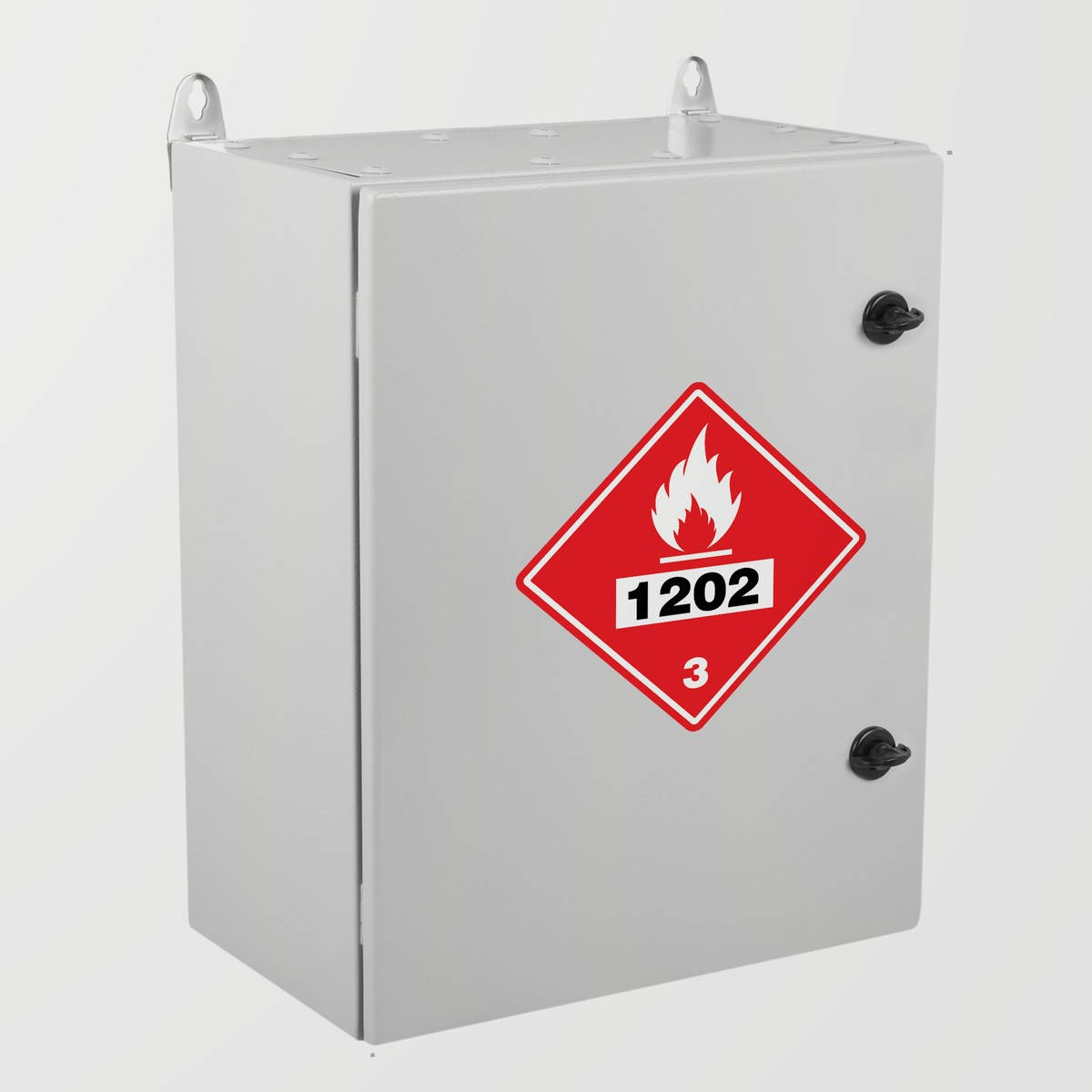
| Diesel can or farm tank | DIESEL FUEL or DIESEL ONLY | Add a second label next to the filler cap. That is where the mistakes happen. |
| 2-stroke mix (chainsaw, outboard) | Custom text, e.g. “2-STROKE MIX 50:1” | We print any text in any language, handy when several people share the tools. |
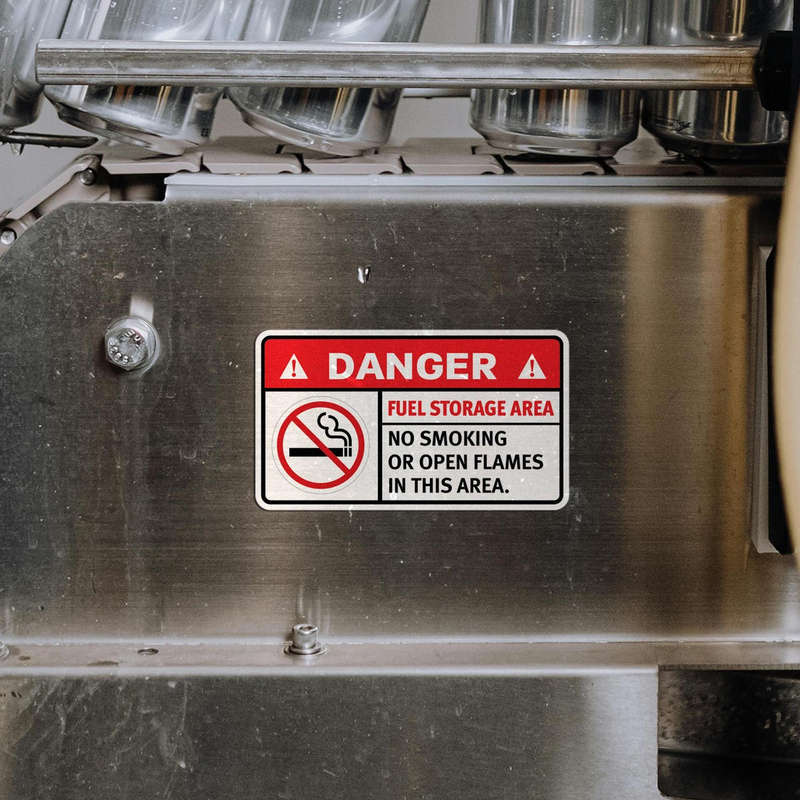
| Fuel store room or cabinet door | DANGER: FUEL STORAGE AREA + NO SMOKING | At eye level on the door, plus one on the inside wall. |
| Pump, tank valve, shut-off switch | EMERGENCY FUEL SHUT-OFF | It must be readable from a distance, so go bigger than you think. |
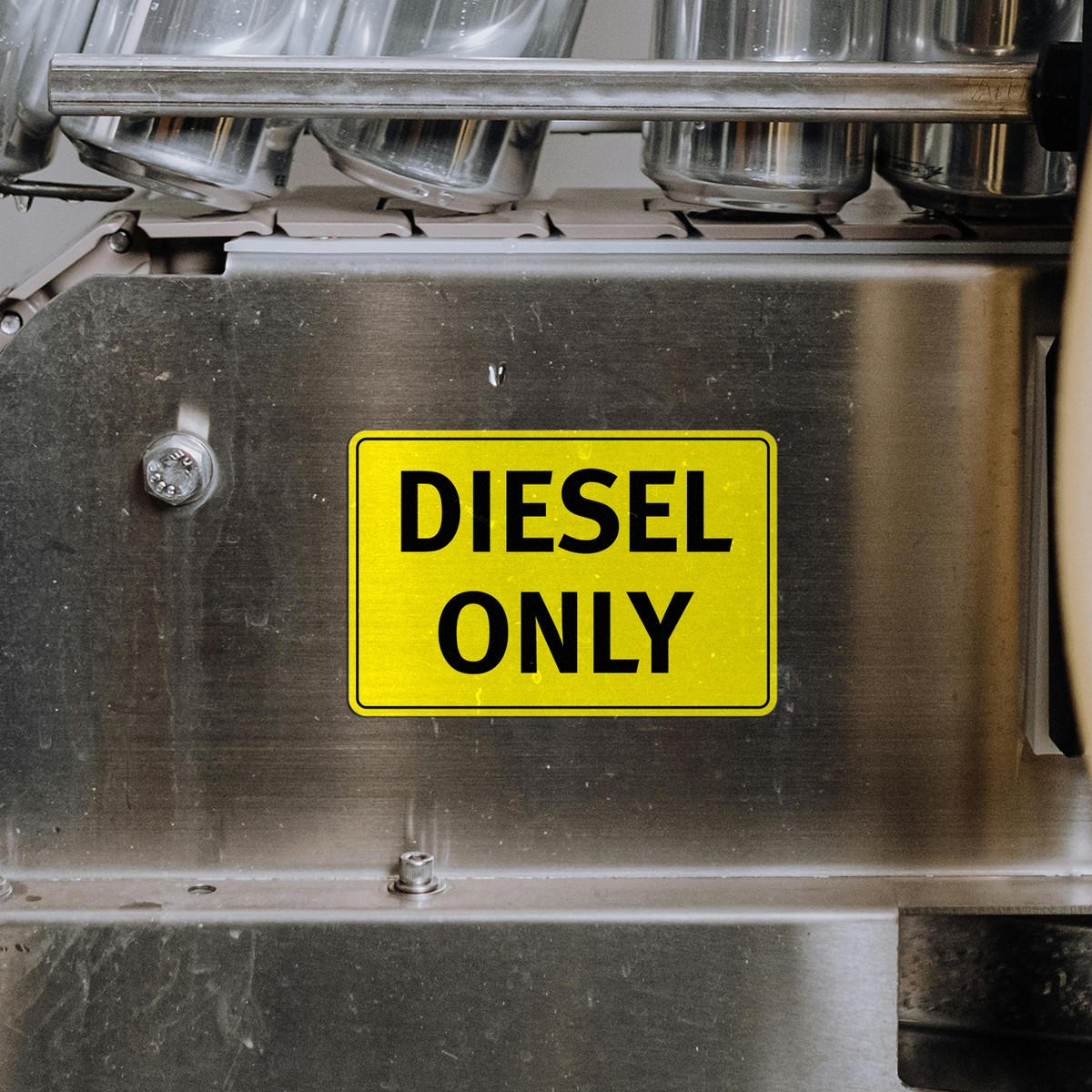
| Tanker, trailer or IBC in transport | UN 1203 / UN 1202 placard | Transport placards follow regulated sizes and materials (ADR in Europe, DOT in the US). Check the rules for your vehicle. |

UN 1203 vs UN 1202: what the numbers mean
UN numbers are four-digit codes that identify dangerous goods in transport. You see them on the orange plates and diamond placards of tankers and on the paperwork that travels with the load. For the fuels most people handle:
- 1203: motor spirit, gasoline or petrol, including ethanol blends.
- 1202: gas oil, diesel fuel and light heating oil.
- 1223: kerosene.
Petrol is the most readily flammable of the three, which is why tankers that switch between fuels are usually marked for the most hazardous product they carry. In the US, diesel is also shipped under NA 1993. So if you were looking for a “1202 placard” for a gasoline tank, the number you need is 1203; 1202 is the diesel number.
Fuel labels from our catalog
Every design below is printed on outdoor vinyl and laminated. Click any label to choose the size.



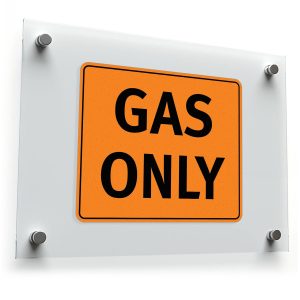
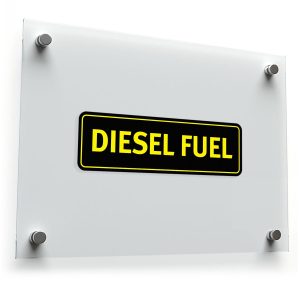
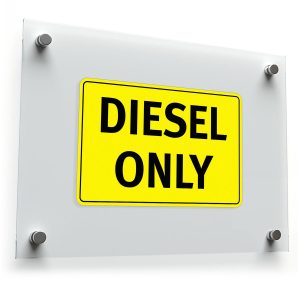
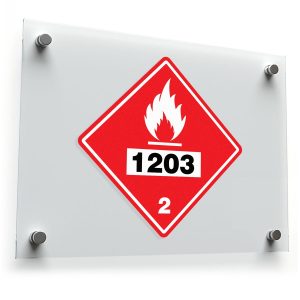

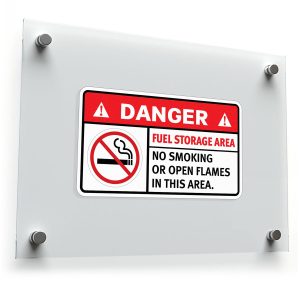
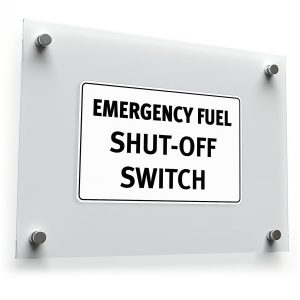


More designs: Fire & Flammable Safety (161 labels), No Smoking signs, chemical labels and extremely hazardous substances.
Choosing a fuel label that lasts
| Situation | Material | Why |
|---|---|---|
| Outdoor tank, vehicle, work van | Polymeric vinyl 70 µm + laminate | Rated 6–9 years outdoors. The laminate shields the print from UV, rain and scratches. |
| Indoor store room, cabinet, short-term site | Monomeric vinyl 95 µm + laminate | Rated 3–5 years outdoors, more than enough indoors. |
| Lettering only, no background (e.g. white DIESEL on a black tank) | Oracal 651 cut vinyl; Oracal 751 cast on curved tanks | Cut on a Summa tangential cutter, so even small letters stay sharp. |
From our production floor
- Plastic cans are slippery. Most jerry cans are made of polyethylene, a low-energy surface that adhesives find hard to grip. Clean the spot with isopropyl alcohol, let it dry, apply at around 20 °C and press hard with a squeegee from the centre outwards. Then give the adhesive 24–48 hours before the can goes back into service.
- Wipe spills off promptly. The laminate protects the print, but no sticker should sit in a puddle of petrol.
- Size it for the reader. A 10 cm label is fine on a 5-litre can; a store-room door or a 1,000-litre tank needs a label people can read from several metres away.
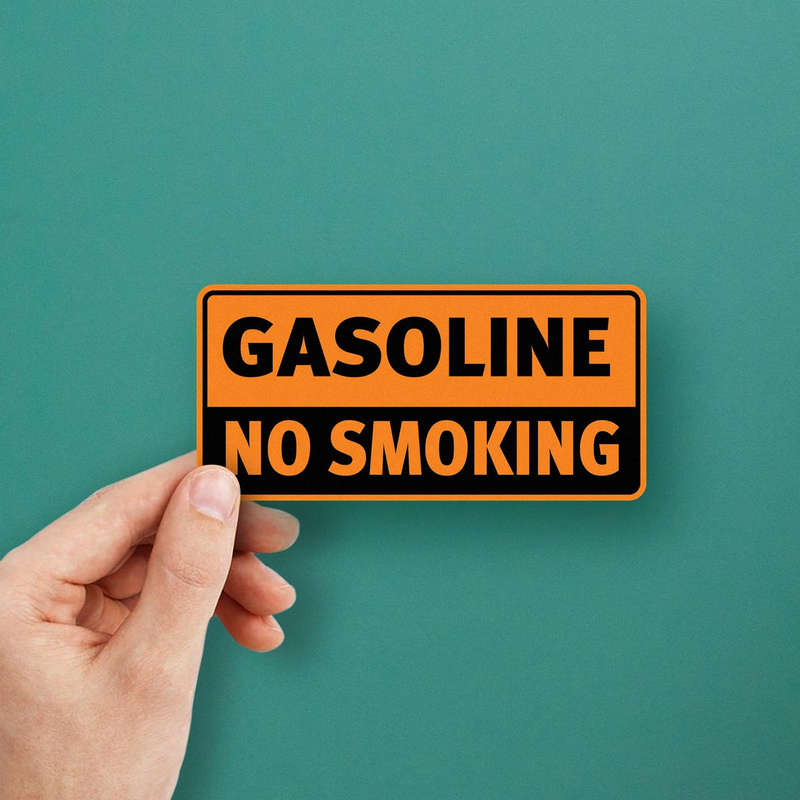
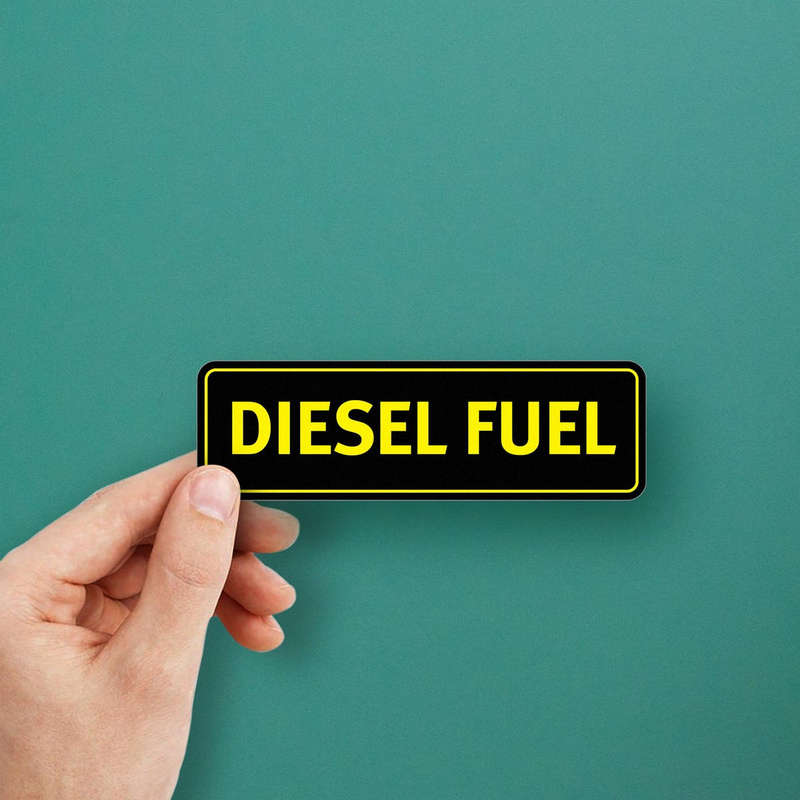
Custom fuel labels
Need “GASOLINE – MOWER ONLY”, a bilingual label, your company logo or a size that fits one particular tank? We make everything to order: any text, any size, any language, from a library of about 1,500 typefaces. There is no minimum order, one label or a hundred. Orders ship from Greece with tracking, usually within 1–2 business days.
Frequently asked questions
Is diesel UN 1202 or NA 1993?
Internationally, and under ADR in Europe, diesel fuel is UN 1202. In the US, shippers may also use NA 1993 for diesel and heating oil. Gasoline is UN 1203 everywhere.
Can I use your 1203 / 1202 stickers as official transport placards?
Transport placards and orange plates must meet regulated sizes and materials. Our placard stickers are ideal for identifying tanks, IBCs and storage areas. If the label is for a vehicle on the road, check the ADR or DOT rules first and tell us the size you need.
Will the label survive petrol or diesel spills?
Our outdoor labels are printed and laminated, which protects the print from weather and occasional splashes. Wipe spills off promptly. If a label will be constantly exposed to fuel, contact us and we will recommend a suitable film.
What colour should a gasoline label be?
Red is the most common choice for gasoline and yellow for diesel, but there is no single worldwide rule. What matters most is the word on the label, and using the same colour code on all your own containers.
Can you print my own text or logo?
Yes. Send us the text, the size and a photo of the surface, and we will design it for you. No minimum order.
Not sure which material fits your project? Send us a photo of the surface and the size you need, and we will recommend the right film.
Related guides: workplace safety decals and fire safety stickers.
