


 Wings
Wings Racing Tribal
 Flames
 Barbecue BBQ
 Body Building
 Dive Scuba sports
 Fishing Lures
 Martial Arts
 Martial Hieroglyph
 Paintball
 Sailing
 Surf
Surf Farm Birds
 Farm Mammals
 Mammals
 Birds
Birds Insects
 Reptiles
 Snakes
 Fishes Fresh Water
 Fishes Salt Water
 Dolphins
 Tuna
Tuna Sharks
 Dragons
 Monsters
 Zombies
 Alien UFO
Uncategorized
Safety Labels for CNC Machines: Complete Guide for Workshops
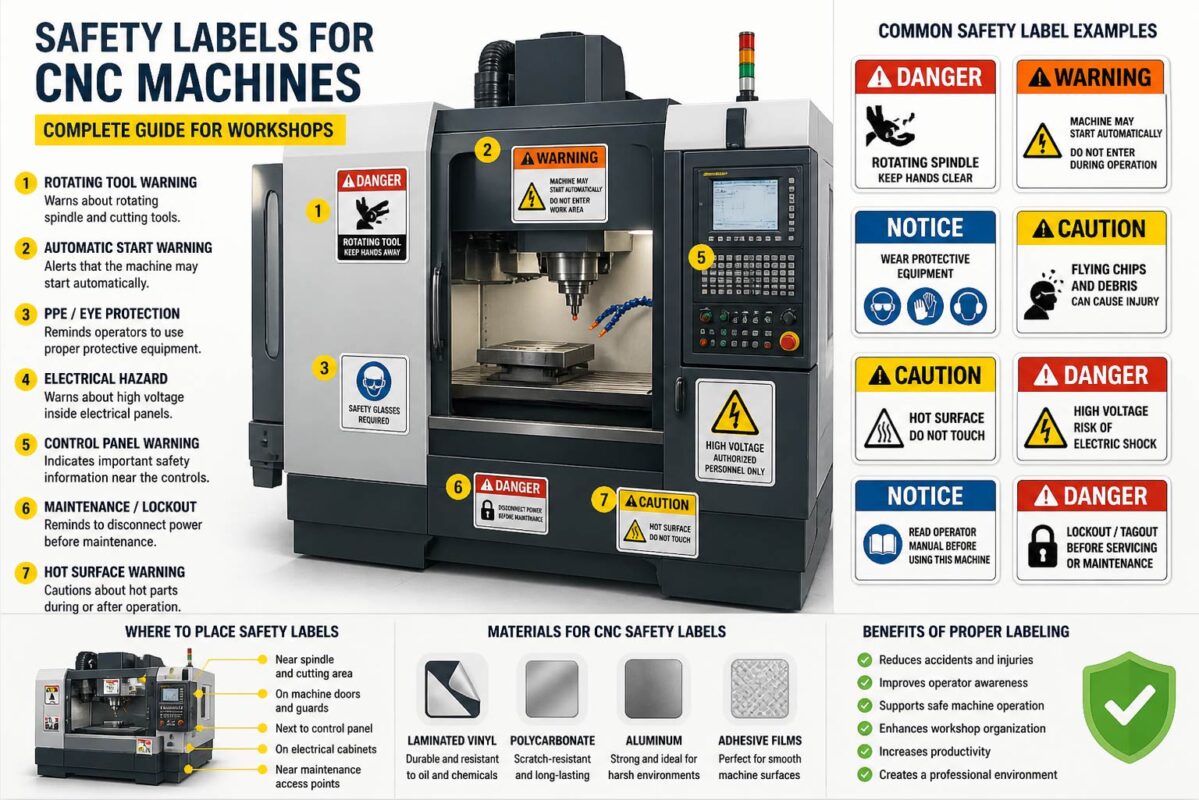
Safety Labels for CNC Machines: Complete Guide for Workshops
Safety labels for CNC machines are essential in modern workshops where precision, automation, and high-speed machining create potential risks. CNC equipment operates with rotating tools, moving axes, sharp cutting edges, and automatic processes, making clear safety communication critical for protecting operators and maintaining safe working conditions.
Whether in small machine shops or large industrial production facilities, properly designed safety labels help reduce accidents, improve operator awareness, and ensure that every machine is used correctly and safely.
Why Safety Labels for CNC Machines Are Important
CNC machines operate automatically and often at high speeds. Without proper warnings and instructions, even experienced operators can make mistakes. Safety labels provide immediate visual guidance directly on the machine, where it matters most.
- They warn about specific hazards in real-time
- They reduce the risk of operator error
- They improve safety awareness during operation
- They support internal safety procedures
- They help maintain a professional and organized workshop
Common Hazards in CNC Machines
Understanding the risks helps define what safety labels are required. CNC machines typically involve:
- Rotating spindles and cutting tools
- Moving machine parts and axes
- Automatic start and stop cycles
- Flying chips and debris
- Coolants and lubricants
- Electrical components and control panels
Each of these hazards should be clearly identified with appropriate safety labels.
Examples of Safety Labels for CNC Machines
1. Rotating Tool Warning Labels
Placed near the spindle or cutting area, these labels warn about moving parts:
- “Danger: Rotating Tool – Keep Hands Away”
- “Do Not Touch While Machine Is Running”
- “Moving Parts – Risk of Injury”
2. Automatic Start Warning
CNC machines can start automatically during programmed cycles:
- “Warning: Machine May Start Automatically”
- “Do Not Enter Work Area During Operation”
3. Eye Protection and PPE Labels
Operators must use protective equipment due to chips and fluids:
- “Safety Glasses Required”
- “Wear Protective Equipment”
- “Hearing Protection Recommended”
4. Electrical Hazard Labels
Control panels and electrical cabinets require clear warnings:
- “High Voltage – Authorized Personnel Only”
- “Risk of Electric Shock”
5. Hot Surface Warning Labels
Some parts of the machine can become hot during operation:
- “Hot Surface – Do Not Touch”
6. Coolant and Chemical Labels
Coolants and lubricants require handling awareness:
- “Avoid Skin Contact”
- “Use Protective Gloves”
7. Maintenance and Lockout Labels
During servicing, clear instructions are required:
- “Disconnect Power Before Maintenance”
- “Lockout Required Before Service”
Where to Place CNC Safety Labels
Correct placement is just as important as the label itself. Safety labels should be positioned:
- Near the spindle and cutting area
- On machine doors and guards
- Next to control panels
- On electrical cabinets
- Near maintenance access points
Labels must always be clearly visible, easy to read, and placed as close as possible to the hazard.
Materials for CNC Machine Safety Labels
CNC environments are demanding. Labels must resist oil, coolant, heat, and cleaning chemicals.
- Laminated vinyl: ideal for durability and flexibility
- Polycarbonate labels: strong and scratch-resistant
- Aluminum labels: long-term industrial use
- Adhesive films: suitable for smooth machine surfaces
High-quality materials ensure that labels remain readable over time.
Custom Safety Labels for CNC Machines
Every CNC machine setup is different. Custom safety labels allow workshops to match their exact machines, processes, and risks.
For example, a workshop may need:
- Machine-specific warning labels
- Custom instructions based on workflow
- Company-specific safety procedures
- Multi-language safety labels for operators
If you need custom industrial safety labels or stickers, choosing the right design and material ensures long-term performance and reliability.
Benefits of Proper CNC Safety Labeling
- Reduces accidents and injuries
- Improves operator awareness
- Supports safe machine operation
- Enhances workshop organization
- Increases overall productivity
- Creates a professional working environment
Best Practices for CNC Safety Labels
- Use clear and simple wording
- Include warning symbols where possible
- Place labels close to the hazard
- Use durable, high-quality materials
- Regularly inspect and replace worn labels
Conclusion
Safety labels for CNC machines are a critical part of any professional workshop. They provide essential warnings, improve safety awareness, and help operators work more confidently and efficiently.
By using properly designed and placed safety labels, businesses can reduce risks, protect employees, and maintain a safer working environment. Investing in high-quality safety labeling is a simple but powerful way to improve daily operations.
Frequently Asked Questions
Why are safety labels important for CNC machines?
They warn operators about hazards, reduce accidents, and improve safe machine operation.
What types of labels are used on CNC machines?
Warning labels, PPE signs, electrical hazard labels, maintenance instructions, and machine-specific safety stickers.
Where should safety labels be placed on CNC machines?
Near the spindle, control panel, machine doors, and any area with potential risk.
Can CNC safety labels be customized?
Yes. Custom labels can be designed based on specific machines, workflows, and safety requirements.
