


 Wings
Wings Racing Tribal
 Flames
 Barbecue BBQ
 Body Building
 Dive Scuba sports
 Fishing Lures
 Martial Arts
 Martial Hieroglyph
 Paintball
 Sailing
 Surf
Surf Farm Birds
 Farm Mammals
 Mammals
 Birds
Birds Insects
 Reptiles
 Snakes
 Fishes Fresh Water
 Fishes Salt Water
 Dolphins
 Tuna
Tuna Sharks
 Dragons
 Monsters
 Zombies
 Alien UFO
Uncategorized
Floor Marking Industrial Safety in Warehouses: Best Practices
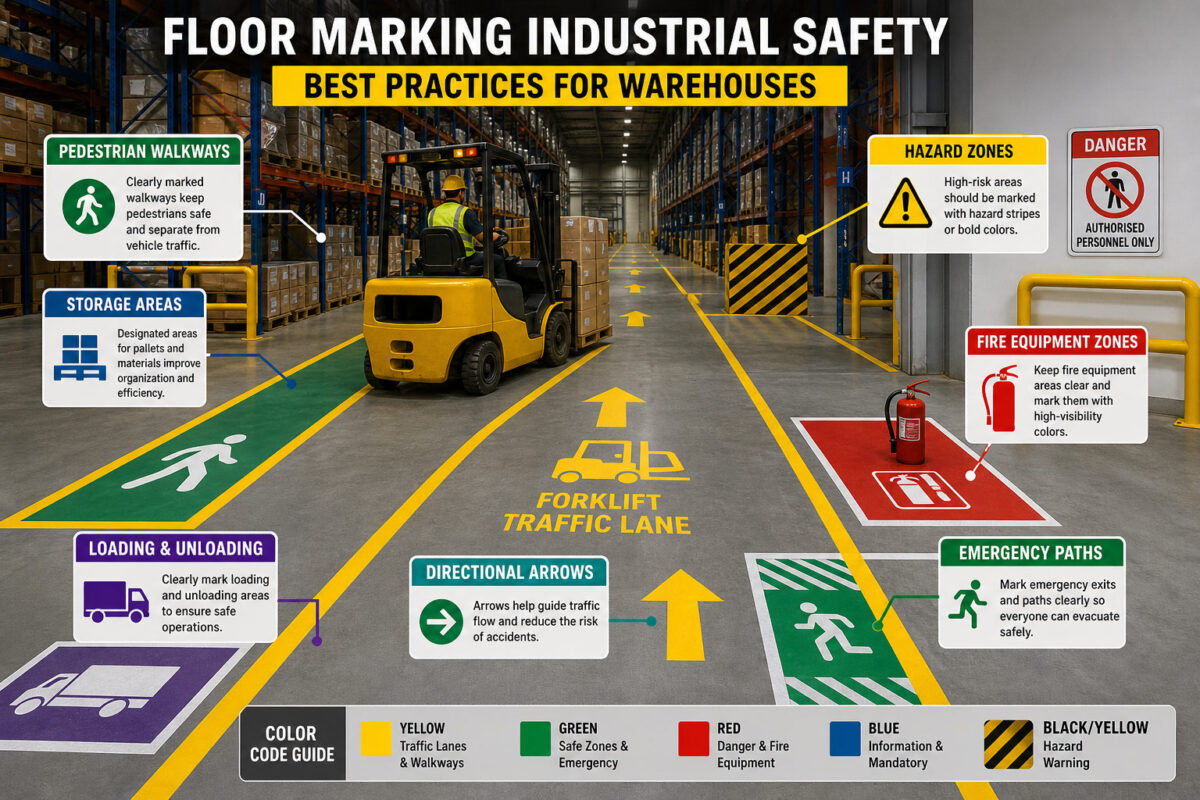
Floor Marking Industrial Safety: Best Practices for Warehouses
Floor marking industrial safety is essential in warehouses where forklifts, pallet trucks, workers, and heavy materials move constantly. Clear floor markings help define safe zones, traffic flow, pedestrian walkways, storage areas, and working zones.
Proper warehouse floor marking improves safety, reduces confusion, and increases efficiency. It provides visual guidance that helps employees move safely and follow structured workflows throughout the facility.
Why Floor Marking Is Important in Warehouses
Warehouses are high-traffic environments where people and machines operate at the same time. Without clear floor markings, the risk of accidents, collisions, delays, and misplaced materials increases.
- Defines safe pedestrian walkways
- Separates forklift traffic from workers
- Improves navigation inside the facility
- Reduces accidents and collisions
- Supports better organization and workflow
Common Types of Floor Marking in Industrial Safety
1. Pedestrian Walkways
Pedestrian walkways are clearly marked paths that allow workers and visitors to move safely through the warehouse. They help separate people from forklift routes and loading areas.
- Usually marked in yellow or green
- Often include walking symbols or arrows
- Kept separate from vehicle traffic
2. Forklift Traffic Lanes
Forklift lanes define where vehicles are allowed to move. This is one of the most important parts of warehouse safety, especially in busy facilities.
- Marked with bold lines or colored zones
- Include directional arrows
- Help prevent collisions with pedestrians
3. Hazard Zones
Danger areas require high-visibility floor markings so workers can quickly recognize increased risk areas.
- Red or yellow-black striped markings
- Used around machinery, loading docks, or restricted zones
- Highlight areas with increased risk
4. Storage and Pallet Positions
Floor markings define where materials, pallets, tools, or finished products should be placed. This keeps the warehouse organized and reduces unnecessary movement.
- Outlined boxes for pallets
- Numbered storage zones
- Clear loading and unloading positions
- Better use of available space
5. Emergency and Exit Paths
Emergency routes must always remain clear and easy to identify. Floor markings can guide people toward exits, fire safety equipment, and emergency assembly points.
- Green markings for safe exit paths
- Visible even in low-light conditions
- Must remain unobstructed at all times
Floor Marking Color Codes in Industrial Safety
Color coding helps workers quickly understand the purpose of each marked area. A consistent color system is important for every warehouse.
- Yellow: general walkways, traffic lanes, and work areas
- Red: danger zones, prohibited areas, or fire equipment areas
- Green: safety equipment, emergency exits, and safe routes
- Blue: mandatory instructions or information zones
- Black and yellow stripes: hazard warning zones
Materials Used for Floor Marking
Industrial floor marking must withstand heavy traffic, forklifts, pallet trucks, cleaning, dust, and daily wear.
- Floor marking tape: easy to apply, flexible, and simple to replace
- Paint: durable solution for long-term marking
- Epoxy coatings: high resistance for heavy-duty industrial areas
- Anti-slip materials: useful in wet, oily, or high-risk areas
- Custom floor stickers: ideal for symbols, arrows, warning messages, and branded markings
Choosing the right material depends on traffic level, surface condition, cleaning routine, and how long the marking needs to last.
Best Practices for Warehouse Floor Marking
Proper floor marking industrial safety systems improve visibility and help workers follow safe movement paths inside the warehouse.
- Keep markings simple and easy to understand
- Use consistent colors throughout the facility
- Place markings where people naturally need guidance
- Make pedestrian routes clearly separate from forklift lanes
- Use arrows and symbols where movement direction is important
- Regularly inspect and replace damaged markings
- Combine floor marking with wall signs and safety labels
Combining Floor Marking with Safety Signs
Floor marking works best when combined with clear safety signs. For example, forklift lanes should include both floor markings and wall signs for better visibility.
If you need custom safety stickers or industrial signage, combining them with warehouse floor marking creates a complete safety communication system.
Real Examples of Warehouse Floor Marking
- Pedestrian walkway: yellow lines with walking icons to guide employees safely
- Forklift route: wide colored lanes with arrows showing vehicle direction
- Pallet parking: outlined floor boxes for organized storage
- Fire extinguisher zone: red marked area that must always remain clear
- Loading dock warning: striped hazard markings near dock edges
- Quality control area: marked inspection zone for products before shipping
Benefits of Proper Floor Marking in Industrial Safety
- Improves worker safety
- Reduces accidents and collisions
- Enhances warehouse organization
- Increases productivity and efficiency
- Supports safety compliance
- Helps new employees understand the workspace faster
- Creates a cleaner and more professional industrial environment
Conclusion
Floor marking industrial safety is a simple but highly effective solution for improving warehouse operations. It helps create structured environments where workers, forklifts, and materials can move safely and efficiently.
By using proper colors, durable materials, clear symbols, and correct placement strategies, businesses can reduce risks and improve daily workflow. Investing in high-quality floor marking is essential for any modern warehouse or industrial facility.
Frequently Asked Questions
What is floor marking in industrial safety?
It is the use of lines, colors, symbols, and floor signs to guide movement, define zones, and improve safety in industrial environments.
What color is used for walkways?
Yellow and green are commonly used for pedestrian walkways in warehouses, depending on the internal safety system of each facility.
Is floor marking required in warehouses?
Yes. Floor marking industrial safety is widely used in warehouses to improve organization, reduce accidents, and clearly define safe working areas.
What is the best material for floor marking?
It depends on the environment. Tape is flexible and easy to replace, while paint and epoxy are more durable for heavy-use industrial areas.
